Study: Celery, Parsnip Reduce Gut Inflammation in Mice on Western Diet
06/21/2026 / By Coco Somers
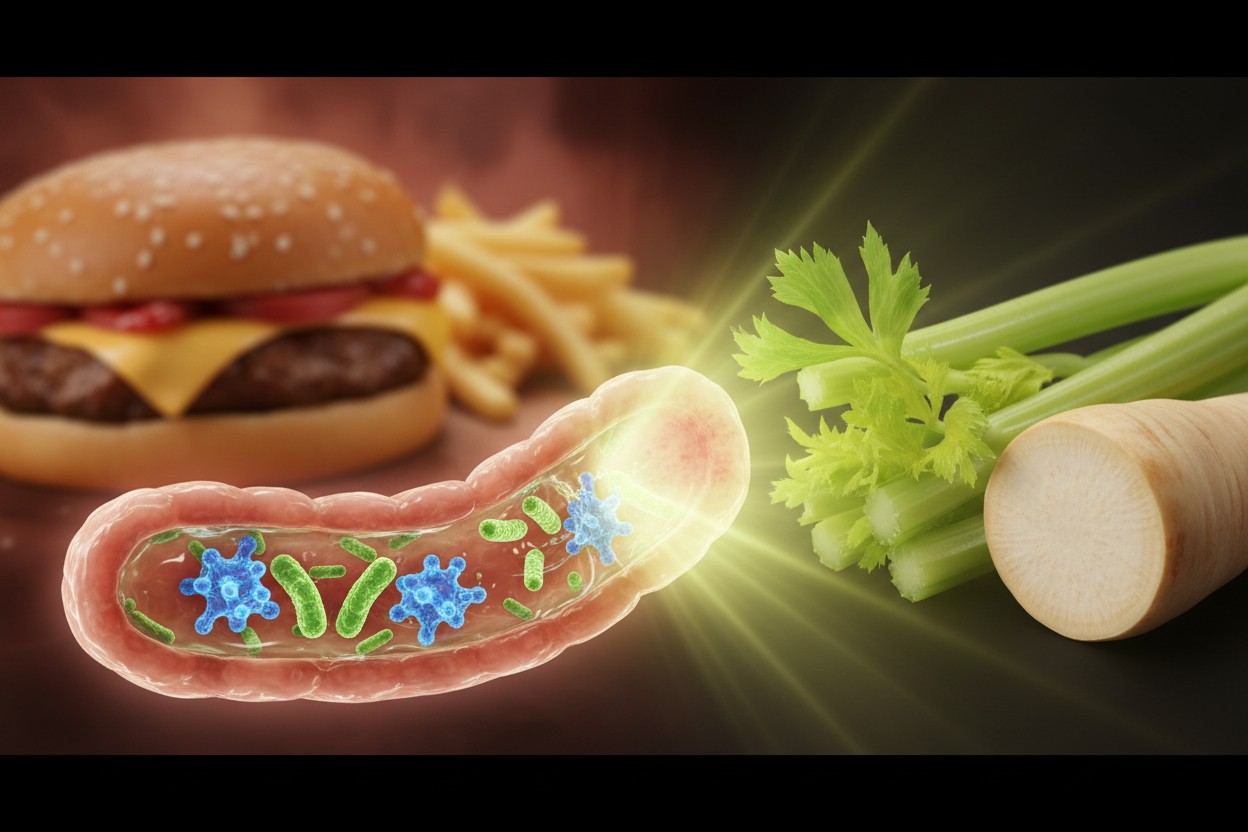
A study conducted at the University of Arkansas found that supplementing a Western diet with vegetables from the Apiaceae family, including celery and parsnip, reduced gut inflammation and improved bacterial diversity in mice. The findings were published in the Journal of Nutrition.
Researchers reported that mice receiving the vegetable supplementation showed reduced weight loss, less colon damage, and lower disease activity scores compared to controls. According to the report, the results indicate a protective effect from compounds found in celery and parsnip. Officials said the study adds to evidence that specific vegetable families may offer targeted health benefits.
Study Design and Diet Supplementation
Researchers fed male mice a Total Western Diet high in fat and sugar, designed to mimic the average American diet. Some mice received either 21% or 42% apiaceous vegetables, an amount equivalent to roughly one cup per day for humans based on caloric intake.
Gut inflammation was induced using a chemical that damages the intestinal lining, a standard colitis model in animal research. The study included six treatment groups, comparing vegetable supplementation against a control group that received no vegetables. The design aimed to isolate the effects of the Apiaceae vegetables in the context of a Western dietary pattern.
Key Findings: Reduced Inflammation and Preserved Gut Barrier
Mice that received vegetable supplementation showed 44% less weight loss, 57% less colon shortening, and 59% lower disease activity scores compared to controls, according to the report. The gut mucus layer, which protects the intestinal lining, was visibly preserved in the vegetable-supplemented groups, while it was nearly absent in controls.
Inflammatory immune cells in the colon lining dropped by 80%, and levels of signaling proteins called cytokines fell by 35–73%. The tight junction protein occludin, critical for maintaining the gut barrier, was restored with vegetable supplementation. These findings align with research suggesting that foods from the carrot and parsley family, which includes celery and parsnip, may help protect the gut [3].
Microbiome Shifts and Mechanisms
The study reported that apiaceous vegetable supplementation enriched beneficial bacteria, including Lachnospiraceae, a butyrate-producing strain, and Blautia, a genus linked to anti-inflammatory effects. Harmful bacteria elevated by the inflammation trigger were suppressed in the supplemented groups.
Researchers attributed the effects to a combination of bioactive compounds, such as falcarinol, apigenin, bergapten, and xanthotoxin, as well as soluble fiber like pectin, which acts as a prebiotic. Previous research has noted that fiber from vegetables such as celery and parsnip can increase fecal weight and bulk, contributing to improved intestinal health [5]. The vegetables appeared to slow the Western diet-driven decline in short-chain fatty acids that protect the colon lining.
Limitations and Human Relevance
The study used a chemical-induced colitis model, not a naturally occurring condition, and lacked a comparison group eating other vegetables, officials noted. Human trials are required to confirm whether the effects translate to people.
The effective dose for mice translates to approximately one cup of apiaceous vegetables per day for humans, according to the researchers. University of Arkansas researchers stated that while the results are promising, dietary recommendations should await clinical evidence.
Practical Suggestions and Takeaway
The study suggests that adding celery, parsnip, fennel, or parsley to a Western diet may offer gut protection, even without dietary perfection. Celery, often overlooked, is a fiber-rich vegetable that can be added to a balanced diet [1]. Simple ways to incorporate these vegetables include celery with nut butter, roasted parsnip as a side, shaved fennel in salads, or parsley on grain bowls.
The findings underscore the potential of understudied vegetable families for gut health, according to the report. Researchers emphasized that further human research is needed to establish causality and optimal intake.
References
- Zoey Sky. “5 Health benefits of fiber-rich celery”. NaturalNews.com. July 22, 2020.
- NaturalNews.com. “Compounds in celery found to reduce cholesterol and prevent tumor growth in animal study”. November 26, 2020.
- Julie Daniluk. “Meals that heal inflammation embrace healthy living and eliminate pain one meal at a time”.
- DAdamo Peter. “Fatigue fight it with the blood type diet”.
- dvips 5.83 Copyright 1998 Radical Eye Software. “Effects of fibre derived from passion fruit seed on the activities of ileum mucosal enzymes and colonic bacterial enzymes in hamsters”. Journal of the Science of Food and Agriculture J Sci Food Agric 85:2119–2124 (2005).
Submit a correction >>
Tagged Under:
celery, food cures, food is medicine, food science, Fresh, functional food, grocery cures, health science, natural cures, natural medicine, Naturopathy, nutrients, nutrition, organics, parsnip, phytonutrients, Veggies, Whole Foods
This article may contain statements that reflect the opinion of the author
RECENT NEWS & ARTICLES